
Choosing between in-office and at-home teeth whitening can be confusing, especially when both promise brighter smiles and noticeable results. Many patients in Council Bluffs, IA, find themselves wondering which option is safer, faster, or more effective. At BlueJay Family Dental, Dr. Steven Fidone often hears these questions from individuals exploring cosmetic enhancements, and understanding the distinctions can help anyone make an informed decision. This blog explains the science, process, benefits, and limitations behind both whitening approaches. By the end, you’ll have a clear sense of the differences so you can choose what fits your lifestyle and goals, with BlueJay Family Dental serving as a familiar reference point in your smile journey.
Understanding the Basics of Teeth Whitening
Teeth whitening works by targeting stains that develop within the enamel or on its surface. These discolorations come from foods, drinks, tobacco, medication, or the natural aging process. Whether whitening takes place in a dental office or at home, both options generally rely on peroxide-based agents to break apart stain molecules. The major differences lie in concentration, application method, and supervision during the procedure. Whitening treatments do not change the fundamental structure of the tooth; instead, they lift pigment from the enamel to create a brighter appearance. Understanding how whitening chemically interacts with tooth surfaces helps clarify why certain methods produce faster or more dramatic results.
The whitening process is considered safe when conducted properly, but the level of effectiveness depends on factors such as the individual’s enamel thickness, natural tooth shade, and presence of restorations. Crowns, veneers, and fillings cannot be whitened, which can influence overall cosmetic outcomes. Moreover, the degree of staining plays a role; intrinsic stains embedded within the tooth are harder to treat than surface-level discoloration. By knowing how peroxide-based whitening affects different types of stains, individuals can better predict their results, regardless of whether they choose at-home or in-office treatment.
In-Office Whitening: What Sets It Apart
In-office whitening involves professionally administered treatments, typically using higher concentrations of bleaching agents than those available at home. During the appointment, the dental team carefully isolates the gums and other soft tissues to prevent irritation, allowing them to apply potent whitening gel directly to the teeth. This controlled environment makes it possible to lift stains quickly and predictably. Many patients appreciate that dramatic results can be noticeable within one visit, creating immediate improvements for events or personal milestones. Because the dentist oversees each step, adjustments can be made to accommodate sensitivity or uneven staining.
Another key advantage of in-office whitening is the customized care that accompanies the procedure. Dentists evaluate dental health beforehand, ensuring that issues such as cavities, gum inflammation, or enamel erosion do not interfere with whitening. This supervision helps minimize risks, especially for individuals with sensitive teeth or underlying oral conditions. Additionally, in-office whitening can involve tools like heat or specialized lights designed to enhance the bleaching process. Even though research varies on how much these enhancements improve outcomes, they can contribute to faster whitening effects. The result is a more uniform and reliable shade shift, achieved under professional guidance.
At-Home Whitening: Convenience and Accessibility
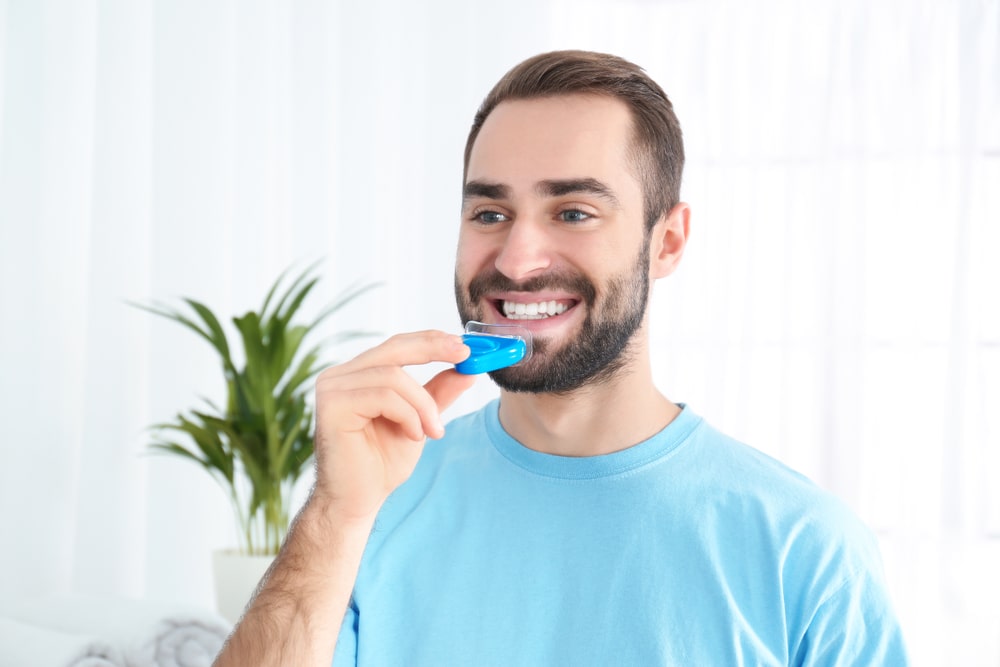
At-home whitening appeals to many people because of its convenience, affordability, and flexibility. These options include over-the-counter strips, gels, and trays, as well as custom trays provided by a dentist. Peroxide concentrations are lower in at-home kits, allowing users to whiten gradually over days or weeks. Although slower, this gentle approach can be more comfortable for those who experience sensitivity during whitening. Users can also control how often they apply treatments, allowing them to stop or adjust usage based on personal comfort. The convenience of managing treatment at home makes this option especially attractive to busy individuals.
While at-home whitening can be effective, the results often depend on how consistently and correctly the user follows instructions. Over-the-counter trays may not fit snugly, causing uneven coverage or leakage of whitening gel onto gums. Strips can also shift during wear, affecting uniformity. Custom trays, when provided by a dental office, offer better precision, though the whitening process still requires patience. At-home users also lack professional monitoring, which means they may not recognize when sensitivity or inflammation signals a need to pause treatment. Despite these limitations, at-home whitening remains a practical approach for those seeking gradual improvement at a comfortable pace.
Comparing Results, Costs, and Timing
The primary differences between in-office and at-home whitening relate to speed and predictability. In-office whitening generally works faster due to its stronger bleaching agents and controlled application. At-home whitening, while capable of achieving similar shades over time, typically requires repeated sessions for several weeks. Many people choose based on how quickly they want results or how much time they can commit to treatment. Cost is another consideration, as in-office whitening is usually more expensive due to professional oversight and advanced materials. At-home kits are more budget-friendly but may require repeat purchases.
When considering sensitivity, both methods can cause temporary discomfort, but in-office professionals can manage symptoms more efficiently. At-home users may experience uneven whitening or gum irritation if they are unaware of proper application techniques. Ultimately, the choice hinges on personal preferences, financial considerations, and desired turnaround time. Some individuals even combine methods by starting with in-office whitening and continuing with at-home maintenance to preserve results. Understanding these comparisons helps individuals select the whitening approach that suits their lifestyle and expectations while staying informed about both the benefits and limitations of each process.
Closing Thoughts
Both in-office and at-home teeth whitening offer valuable ways to brighten your smile, but the best choice depends on factors like budget, timing, dental sensitivity, and personal preference. By understanding the distinctions between professional and at-home methods, anyone can confidently pursue the option that aligns with their goals. BlueJay Family Dental in Council Bluffs, IA, hopes this educational overview helps individuals make informed decisions about their whitening journey, wherever it may lead with Dr. Steven Fidone as a familiar local reference.
Resources
Kwon, S. R., & Wertz, P. W. (2015). Review of the Mechanism of Tooth Whitening. Journal of Esthetic and Restorative Dentistry.
Joiner, A. (2006). The Bleaching of Teeth: A Review of the Literature. Journal of Dentistry.
Li, Y. (2011). Safety Controversies in Tooth Whitening. Dental Clinics of North America.