
Understanding Dental Impressions
Dental impressions are an important part of many dental procedures. An impression creates a detailed representation of the teeth and surrounding oral structures, allowing dental professionals to plan treatments and create customized restorations or appliances. Traditionally, impressions were made by placing a tray filled with a soft impression material into the mouth. As dentistry has advanced, digital scanning technology has introduced another option: digital impressions.
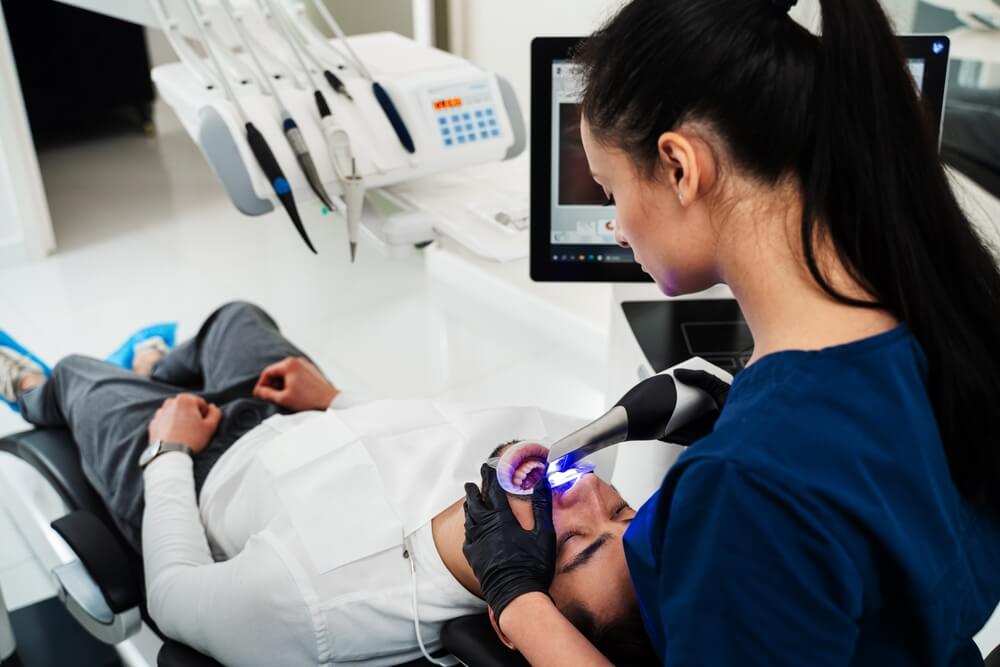
At BlueJay Family Dental in Council Bluffs, IA, understanding the differences between these two approaches can help patients feel more informed about what to expect during dental treatment. Both traditional and digital impressions are designed to capture accurate information about the mouth, but they differ considerably in the way that information is collected and processed.
How Traditional Dental Molds Work
Traditional impressions use a tray and impression material that is placed over the teeth. The material gradually sets while the patient keeps their teeth positioned within the tray. Once hardened, the impression is removed and sent to a dental laboratory or used to create a physical model of the patient’s teeth.
This method has been used successfully for many years and can provide detailed results when performed properly. However, some patients find the process uncomfortable, particularly when the impression tray creates pressure or triggers a sensitive gag reflex. The material may also have an unpleasant taste or texture, and patients generally need to remain still while it sets.
How Digital Impressions Work
Digital impressions use an intraoral scanner to capture images of the teeth and mouth. Instead of filling a tray with impression material, a small scanning device is moved throughout the mouth. The scanner collects numerous images and combines them into a three-dimensional digital model.
Digital impressions can make the process more comfortable for many patients because there is no traditional impression material covering the teeth. They also allow dental professionals to immediately view the captured images and identify areas that may need to be rescanned. The resulting digital file can be transferred electronically for treatment planning or the creation of dental restorations.
Comparing the Two Methods
While both techniques serve the same general purpose, the experience can be different. Key differences include:
- Comfort: Digital scanning may be easier for patients who dislike traditional impression material or experience gagging.
- Processing: Digital files can be transferred electronically without shipping a physical impression.
- Visualization: Digital scans can be viewed on a screen, providing a three-dimensional representation of the teeth.
- Storage: Digital models can be stored electronically rather than requiring physical space for molds.
- Accuracy: Both approaches can produce highly detailed results when properly performed, although the quality of a digital scan depends on the scanner and scanning technique.
The best approach depends on the specific procedure, the patient’s needs, and the technology available for the treatment being performed.
When Dental Impressions May Be Used
Impressions may be involved in treatments requiring customized dental restorations or appliances. For example, impressions can help create crowns and bridges that are designed to fit the shape and position of existing teeth. They can also be used when planning certain implant restorations or creating removable dental appliances.
Digital technology continues to become more common because it can streamline communication between dental offices and laboratories. However, traditional impressions remain a reliable technique and may still be appropriate in certain situations. Neither method is universally better for every patient or procedure.
Choosing the Right Impression Method
The transition from traditional molds to digital impressions represents one of the many ways dental technology has evolved. Digital scanning can offer a more streamlined experience, while traditional impressions continue to provide a dependable method for capturing detailed information about the mouth.
Patients who understand how these technologies differ can have more productive conversations about their dental care and what to expect during treatment. Whether impressions are captured digitally or traditionally, accurate records remain an important part of creating properly fitting dental restorations and appliances. For patients in Council Bluffs, IA, BlueJay Family Dental emphasizes the importance of understanding modern dental techniques as part of making informed decisions about oral health.
Resources
- American Dental Association. (2024). Digital Dentistry and Dental Technology. American Dental Association.
- Christensen, G. J. (2009). Will digital impressions eliminate the current problems with conventional impressions? Journal of the American Dental Association.
- Zimmermann, M., Mehl, A., Mörmann, W. H., & Reich, S. (2015). Intraoral scanning systems—A current overview. International Journal of Computerized Dentistry.